

As core equipment in industries such as petrochemicals, metallurgy, ceramics, and building materials, industrial kilns account for over 60% of an enterprise’s total energy consumption. Energy conservation and consumption reduction have always been critical pain points to address in the industry. Traditional kiln insulation materials like refractory bricks and perlite either have high thermal conductivity (leading to significant heat loss) or are cumbersome to install with short service lives, making it difficult to balance insulation performance and operation-maintenance costs. The emergence of ceramic fiber cotton, however, provides an efficient solution for energy conservation in industrial kilns.
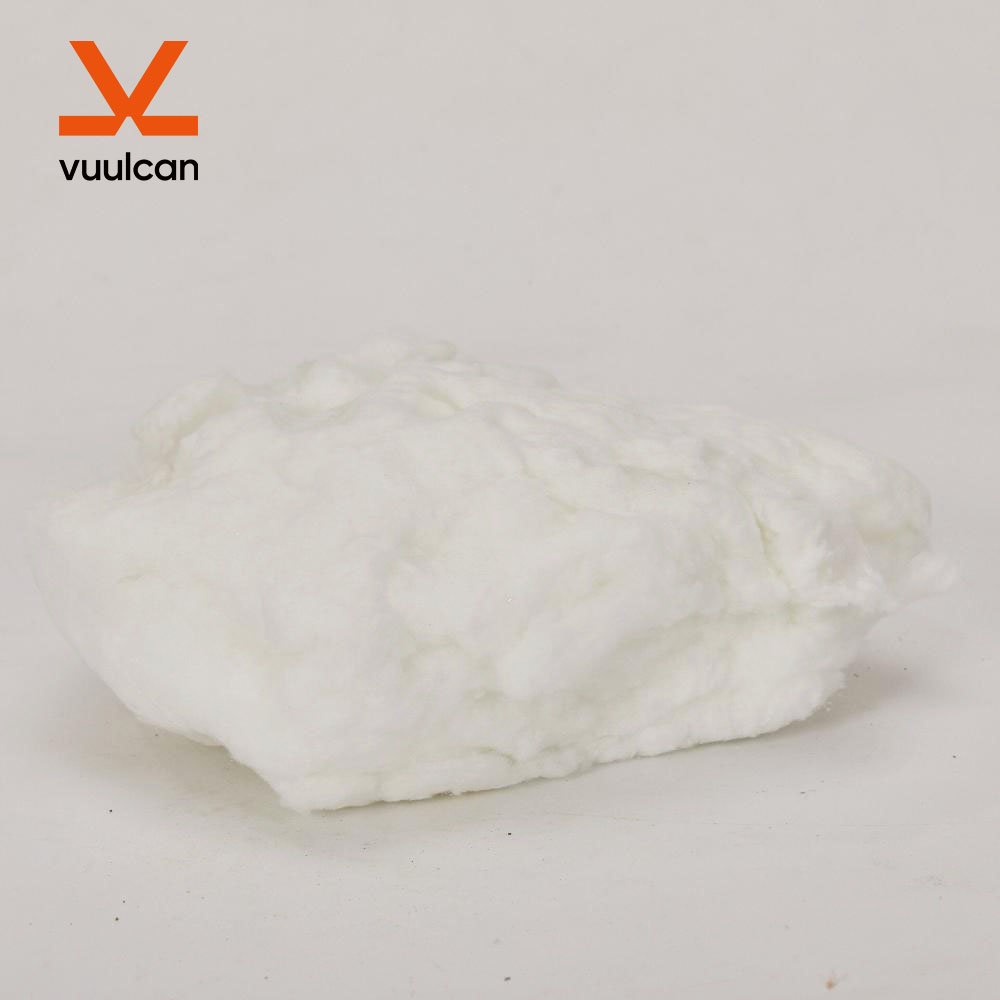
Ceramic fiber cotton is a lightweight refractory insulation material mainly composed of alumina and silica, whose core properties directly target the energy-saving pain points of kilns. Its thermal conductivity is only 1/5 that of traditional refractory bricks, greatly reducing heat conduction loss through the kiln body. With a temperature resistance range from -200℃ to 1400℃, it meets the operating requirements of most industrial kilns. Additionally, its bulk density is only 200-300kg/m³, classifying it as a lightweight material that does not increase the structural load of the kiln body. Furthermore, ceramic fiber cotton exhibits excellent thermal shock resistance, enabling it to adapt to sudden temperature changes caused by frequent kiln startups and shutdowns, thus preventing material cracking and falling off.
In terms of installation and application, ceramic fiber cotton offers significant flexibility. It can be cut into different specifications according to the kiln shape and installed via pasting, anchoring, or filling. It is suitable not only for laying the overall insulation layer in newly built kilns but also for energy-saving renovations of old kilns, with a construction period only 1/3 that of traditional insulation materials. For example, in the renovation of ceramic roller kilns, replacing the original refractory brick lining with a ceramic fiber cotton composite layer can directly reduce heat loss from the kiln body’s heat dissipation surface.
Practical cases further confirm its energy-saving value: After a building materials enterprise applied ceramic fiber cotton insulation renovation to its Φ3.6×72m rotary kiln, the kiln surface temperature dropped from 180℃ to 65℃, the standard coal consumption per ton of clinker decreased by 12kg, and the annual energy cost savings exceeded 800,000 yuan. For a metallurgical plant’s heat treatment kiln using ceramic fiber cotton, the furnace thermal efficiency increased by 18%, the energy consumption for kiln startup and shutdown decreased by 25%, and the equipment operation cycle doubled.
Of course, ceramic fiber cotton has limitations: long-term use in high-temperature environments above 1200℃ may cause slight shrinkage; its resistance to mechanical impact is relatively weak, requiring matching protective layers. However, overall, its energy-saving benefits far outweigh the usage costs. Moreover, with the development of modified ceramic fiber cotton, its high-temperature resistance and anti-shrinkage performance have been significantly improved.
Energy conservation in industrial kilns is a key link in achieving industrial carbon reduction. Relying on its lightweight, high-efficiency, and easy-to-install characteristics, ceramic fiber cotton has become the preferred material for kiln insulation and energy conservation. Under the dual-carbon goal, the widespread application of such lightweight insulation materials will not only help enterprises reduce energy consumption costs but also promote the upgrading of the industrial kiln industry towards a green and low-carbon direction.