
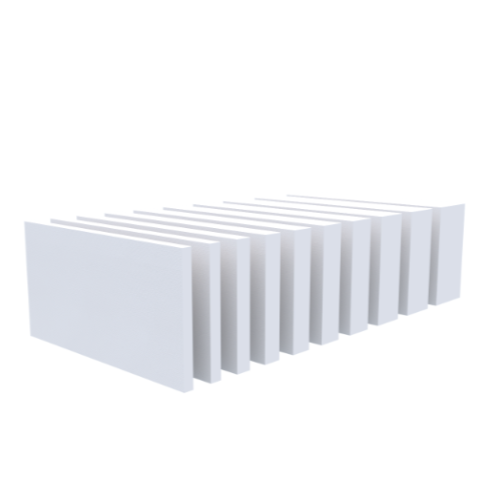
Characteristics of calcium silicate board:
Calcium silicate board is made of stone as raw material. It can withstand a maximum temperature of 1050℃. Calcium silicate board itself has high strength, and it is not easy to break into pieces during construction and cutting, with very little loss, which greatly saves construction costs. In addition, calcium silicate board has a low thermal conductivity and high strength, and is mostly used for insulation and heat preservation of boilers, kilns, heating furnaces, cellar walls, etc.
Technical indicators of calcium silicate board:
| Physical Index | Unit | HCS-20 | SCS-25 | National Standard (GB10699-2015) |
|---|---|---|---|---|
| Bulk Density (max.) | kg/m³ | ≥200 | ≥230 | ≤270 |
| Flexural Strength (min.) | MPa | ≥0.33 | ≥0.4 | 0.33 |
| Compressive Strength at 5% Deformation (min.) | MPa | ≥0.65 | ≥0.8 | 0.65 |
| Linear Shrinkage (1000°C × 3h) | % | ≤2 | ≤2 | 2 |
| Thermal Conductivity (100°C) (min.) | W/m·K | ≤0.065 | ≤0.069 | ≤0.065 |
| Maximum Service Temperature | °C | 1000 | 1050 | 1000 |
Advantages of calcium silicate board:
Our company’s calcium silicate board adopts a new process, which enhances the strength of the board. It is convenient to cut during construction without breaking into pieces, greatly reducing the loss during the construction process and saving costs.
- The new process calcium silicate board not only has high strength but also has a longer service life compared to the old process calcium silicate board, which can meet the usage requirements of multiple industries.
Calcium silicate board is highly resilient and will not deform even in a long-term high-temperature environment. It can well support the furnace equipment and ensure the stability of the entire refractory body.
- The thermal conductivity of the new process calcium silicate board is lower than the national standard, providing better insulation.
The production process of calcium silicate board manufacturers:
The main raw materials of calcium silicate board are calcium oxide and quartz sand. The selected materials by the manufacturer are processed and digested by a raw material processing mill and a lime digester to remove the cloud and slag parts, ensuring the stability of the composition and performance. After further fine processing, the chemical composition purity is high and the particle size distribution is optimized. The key process – synthesis – adopts the internationally popular hydrothermal dynamic synthesis method to ensure the stable and consistent quality and performance of the synthetic material. After the successful reaction in the reactor, reinforcing fibers are added. The slurry is sent to the press for pressurization and shaping. The formed blocks are placed on the kiln cart and finally pushed into a 60-meter tunnel kiln for drying to ensure the strength and toughness of the product.
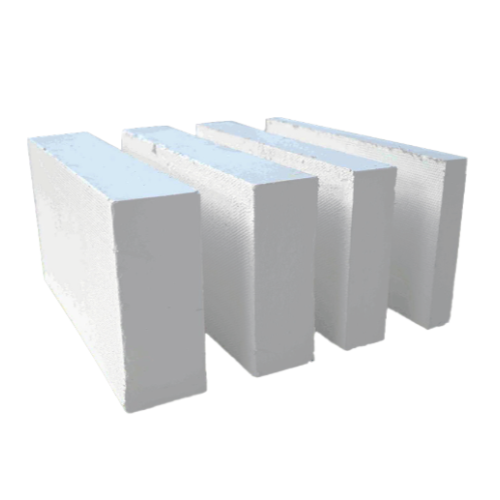
Application of calcium silicate board:
Metallurgical industry: heating furnaces, soaking furnaces, stepping furnaces, annealing furnaces, high-temperature flues, hot air ducts;
Petrochemical industry: heating furnaces, ethylene cracking furnaces, hydrogenation furnaces, catalytic cracking furnaces;
Cement industry: decomposer, preheater, tertiary air duct, kiln head hood, cooler, flue chamber;
Ceramic industry: Tunnel kiln wall;
Glass industry: The bottom and walls of the melting furnace;
Electric power industry: Preheating furnace pipes, boiler linings;
Shipbuilding industry: Deck dressings
Non-ferrous metals industry: electrolytic cells, etc.